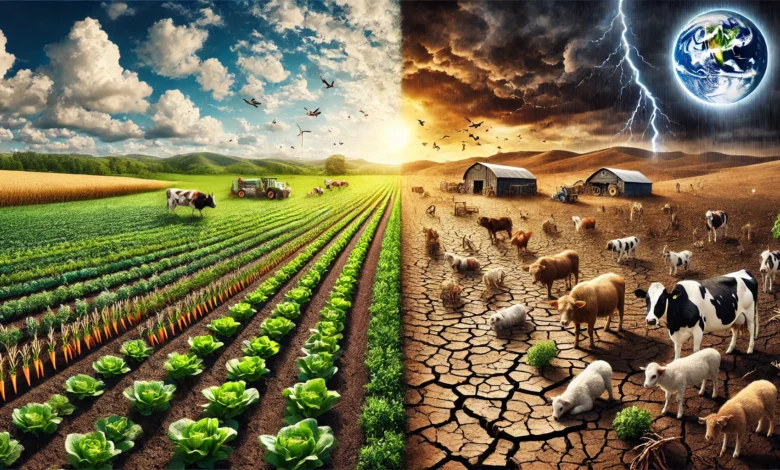
Climate change is quickly turning into one of the most daunting obstacle we face as a global agriculture sector. From altering the temperature to changes in rainfall patterns and the growth of more extreme weather events, it is important to understand the effects of climate change on agriculture, in order to manage potential dangers to supplies of food and secure economies in the future.
Contents
Temperature Changes and Crop Yields
One of the most immediate changes that climate change will induce in agriculture is the implications of temperature changes.
- Higher temperatures will tend to hasten maturity rates of crops but consistently lower yields of crops.
- Climate change implications suggest wheat will decline by 6% for every 1°C temperature increase (2025 global agricultural report).
- Certain crops will be particularly sensitive to heat stress, during the sensitive stages of the crop such as rice and maize.
In regions that are typically more moderate in temperature, it is likely that crops may benefit initially from a longer growing season but temperature changes will ultimately have a net negative impact on global food production.
Changes to Rainfall Patterns
Habitually changes to rainfall patterns are another area in which agriculture will be affected by climate change.
- Heavy rain and flooding can effectively destroy crops and soil structure.
- Less rain will force drought and ineffective water for irrigation.
- The extreme variability of rainfall will create major planning issues for farmers as it will be bitterly difficult to establish planning around planting and harvesting cycles.
In places like Sub-Saharan Africa and South Asia, the majority of the population is reliant on seasonal rains and will continue to suffer from erratic rainfall patterns. If you are curious to learn more about the broader environmental effects aside from agriculture alone, check out our article: Climate Change Effects on the Environment.
Increased Intensity and Frequency of Extreme Weather Events
Climate change is increasingly lending itself to the incidence of extreme weather events, with more and more frequent occurrences of:
- Hurricanes and Typhoons.
- Droughts and extended periods of dryness.
- Heatwaves and cold snaps.
These can all result in crop, animal, and farming structure loss. A single extreme drought can destroy an entire season’s worth of produce, and repeated flooding can render agricultural land unproductive for years.
Soil Degradation
Climate change has effects on soil health in the following ways:
- Heavy rains result in greater soil erosion, as the vital nutrients are washed away.
- Drought results in condensed soil, causing a loss of organic material.
- As temperatures rise, organic material decomposes more quickly, leading to less fertility in the soil.
Soil health is the basis of healthy agricultural production. As soils degrade, farmers will likely need to rely more heavily on fertilizers and chemicals, especially if they are not farming sustainably, these will also adversely affect the environment.
You can find more information on some sustainable land use practices from our article Practical Water Conservation Techniques You Can Implement Today.
Impacts on Livestock
Climate change affects livestock farming heavily too:
- Heat stress will decrease animal growth rates, decrease fertility, and decrease milk production.
- Drought results in decreased availability and quality of feed, impacting livestock health.
- Emerging warmer climates have seen an increase in disease and parasites including ticks and mosquitoes.
In regions where livestock forms the backbone of rural economies, these effects could lead to a major financial and food security crisis.
Pest and Disease Pressure
With rising temperatures and changing weather patterns, agricultural pests and diseases will become more prevalent and diverse.
- Many insect species, including locusts, thrive in hotter weather, which is good news for them but not for agriculture – potential harvests are decimated.
- Many fungal diseases are spread rapidly in warm, moist weather.
- Again, traditional pest management methods may very well be less effective, necessitating new, dynamic adaptation methods.
This compounded pressure of pests and diseases raises serious implications for our food contexts overall – both quantity and quality of food.
Food Security and Economic Viability
The effect of lost production from crop loss, diminished soils, extreme weather, and increased pests create a consequential threat to global food security.
- Food prices can increase rapidly in the face of shortages, which can hit communities with lower incomes hardest.
- If rural economic viability fails, it can create reasons for migration, social unrest, and broader community economic disruptions.
Vast amounts of investment will be needed in the agricultural sector, but even more in developing countries, to explore adaptation measures to avert losses.
If you would like explore renewable solutions in providing energy access stability to farming communities, you can read our article: Solar Energy Worldwide.
Adaptation Solutions
It may seem overwhelming, but there are responses that farmers and their implementers can take to respond to climate change:
- Develop climate resilient crop varieties, especially drought resistant and heat tolerant.
- Improve water use efficiency through irrigation systems.
- Encourage agroecology, and mixed farming systems.
- Conserve soils through practices such as no till and cover cropping.
- Increase early warning systems for extreme weather events.
Advancements in precision agriculture, biotechnology, and sustainable practices will present new solutions to improve resilience in the farming sector.
Climate change is a real threat to agriculture, but real actions can change this. Strengthening agricultural resilience is about not just food security, but about livelihoods, economies, and environmental sustenance.
The choices we make today regarding climate actions will be reflected in our agricultural environments of tomorrow. It is important we invest in sustainable food production practices and health climate technology practices to create a more stable and prosperous future.