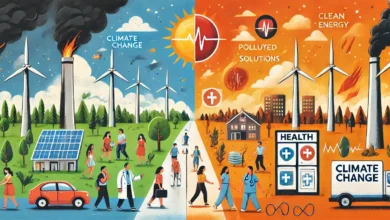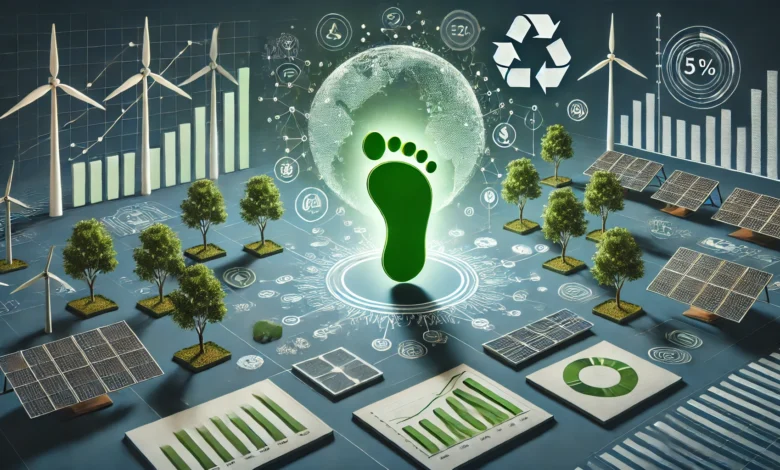
A carbon footprint is the total amount of greenhouse gases emitted directly or indirectly by human activities, expressed in terms of carbon dioxide equivalents (CO2e). It measures the environmental impact of daily activities such as transportation, energy use, and food production.
This measurement considers not only the emissions generated during usage but also those released during production and disposal. For example, the energy transition required to produce electric vehicles may initially generate higher carbon emissions, but their lifetime impact is significantly lower than gasoline-powered cars. Tracking and understanding carbon footprints is critical in making informed decisions about adopting sustainability strategies.
Contents
Why Is Carbon Footprint Important?
Reducing carbon emissions is vital in addressing climate change and ensuring a sustainable future. Excessive emissions lead to rising temperatures, melting glaciers, and severe weather patterns, making it essential to adopt sustainability strategies and integrate renewable energy solutions.
For instance, data from the International Energy Agency (IEA) indicates that energy production accounts for nearly 42% of global greenhouse gas emissions. By transitioning to renewable energy integration, we can significantly cut down this impact. Furthermore, adopting low-carbon technologies can reduce dependency on fossil fuels, making energy systems more resilient and cost-effective.
How Is Carbon Footprint Measured?
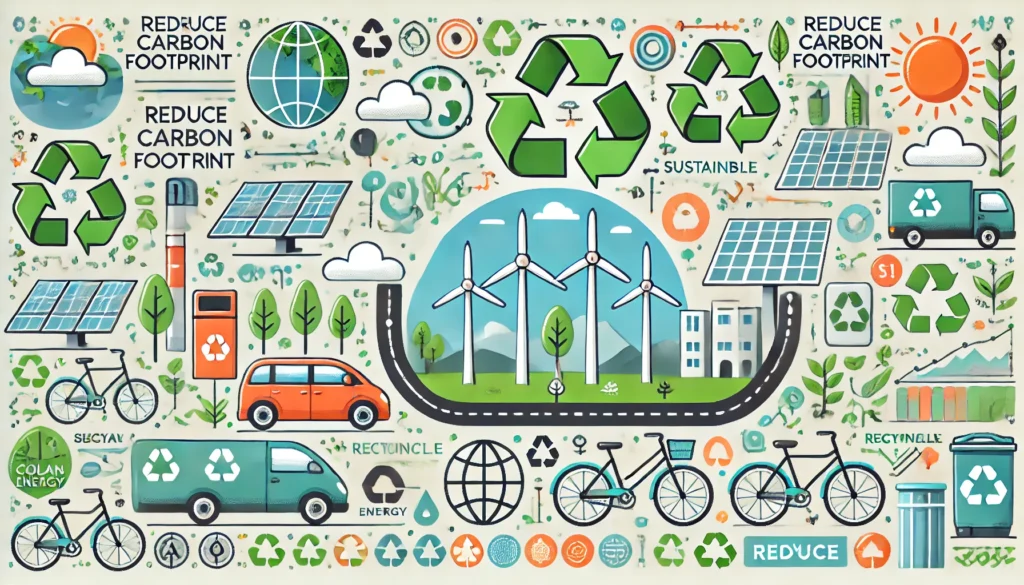
1. Direct Emissions Measurement
This method calculates carbon emissions produced by burning fossil fuels, such as gasoline and natural gas, primarily in transportation and heating. For example, driving a gasoline-powered car for one mile produces approximately 404 grams of CO2e.
2. Indirect Emissions Measurement
Indirect emissions come from the production and transportation of goods and services. Manufacturing, supply chains, and consumption patterns all contribute to greenhouse gas reduction challenges. A simple example is the production of bottled water, where emissions arise from plastic manufacturing, transportation, and refrigeration.
3. Carbon Footprint Calculators
Online tools evaluate carbon footprints based on energy use, travel habits, and waste production. These tools help identify areas for improvement and are widely used by individuals and businesses. Calculators like the EPA Carbon Footprint Calculator and CoolClimate Network’s tool provide accurate data for assessing emissions.
4. Life Cycle Assessments (LCA)
LCA examines the environmental responsibility of products by analyzing their impact from production to disposal, promoting energy efficiency and sustainable choices. For example, conducting an LCA on solar panels includes assessing emissions during manufacturing, transportation, and installation.
Methods to Reduce Carbon Footprint
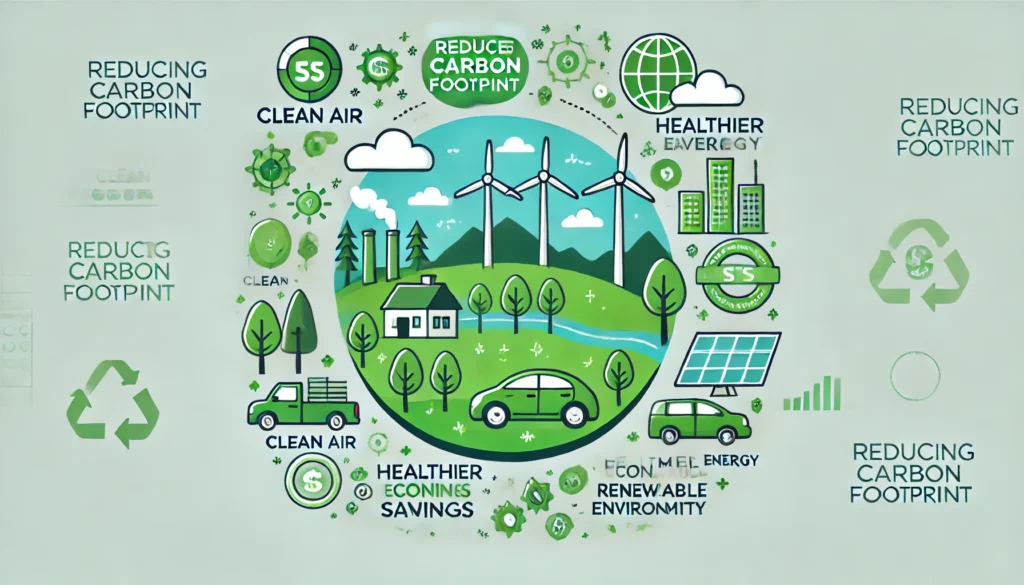
1. Shift to Renewable Energy
Adopting renewable energy sources such as solar, wind, and hydro reduces dependence on fossil fuels and supports clean energy solutions. Countries like Germany and Denmark have successfully implemented large-scale renewable energy integration, setting an example for others.
2. Improve Energy Efficiency
Upgrading to LED lights, smart home systems, and energy-efficient appliances helps reduce energy waste and improve energy efficiency. According to the U.S. Department of Energy, LED bulbs use 75% less energy and last 25 times longer than incandescent lighting.
3. Sustainable Transportation
Opting for public transit, carpooling, or electric vehicles reduces reliance on fossil fuels and lowers carbon emissions. For example, switching to an electric vehicle can reduce carbon output by 50-70% compared to traditional gasoline vehicles.
4. Carbon Offsetting Programs
Investing in carbon offsetting initiatives, like reforestation and clean energy projects, compensates for unavoidable emissions and promotes net-zero emissions. For instance, companies like Microsoft and Google have invested heavily in carbon neutrality initiatives to offset their operational impact.
5. Reduce Waste and Adopt Circular Economy Practices
Recycling, composting, and minimizing single-use plastics contribute to sustainability strategies that support climate change mitigation. Implementing a circular economy approach ensures resources are reused and recycled rather than discarded, reducing overall environmental impact.
Benefits of Reducing Carbon Footprint
1. Environmental Protection
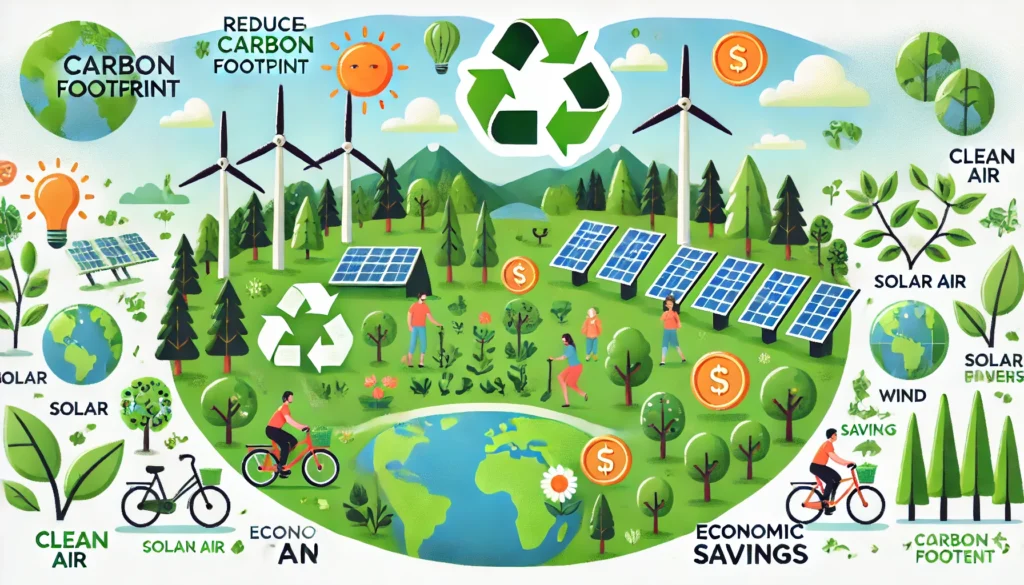
Lower greenhouse gases help mitigate climate change and preserve ecosystems. Studies show that reducing carbon emissions by 45% by 2030 is critical to limiting global warming to 1.5°C.
2. Economic Advantages
Adopting energy efficiency practices reduces energy costs, leading to long-term savings. Renewable energy sources also create jobs, with the solar industry alone employing over 250,000 workers in the U.S.
3. Better Public Health
Cleaner air from reduced emissions improves respiratory and cardiovascular health. Urban areas with lower pollution levels report fewer cases of asthma and lung diseases.
4. Enhanced Corporate Responsibility
Businesses adopting sustainable practices improve their reputation and attract environmentally conscious consumers. For example, companies certified as B Corps demonstrate their commitment to environmental responsibility.
Steps Toward Carbon Neutrality
- Conduct a carbon footprint assessment to understand current emissions.
- Set realistic net-zero emissions goals to reduce overall impact.
- Develop plans integrating renewable energy integration and low-carbon technologies.
- Track progress and refine strategies to maintain environmental responsibility.
Understanding what a carbon footprint is and implementing measurement and reduction methods are crucial steps toward creating a sustainable future. By adopting renewable energy, improving energy efficiency, and participating in carbon offsetting programs, individuals and organizations can significantly reduce their environmental impact. Start making a difference today and contribute to a cleaner, greener planet.